For decades, sophisticated contract management was the exclusive domain of large organisations with legal teams, compliance departments, and budgets for specialist software. Small businesses managed contracts with spreadsheets, shared drives, and institutional memory — or didn't manage them at all.
AI is changing that.
What AI contract analysis actually does
Modern AI models — particularly large language models trained on vast corpora of legal text — can read and understand contracts in ways that were impossible five years ago.
Today, AI contract analysis can:
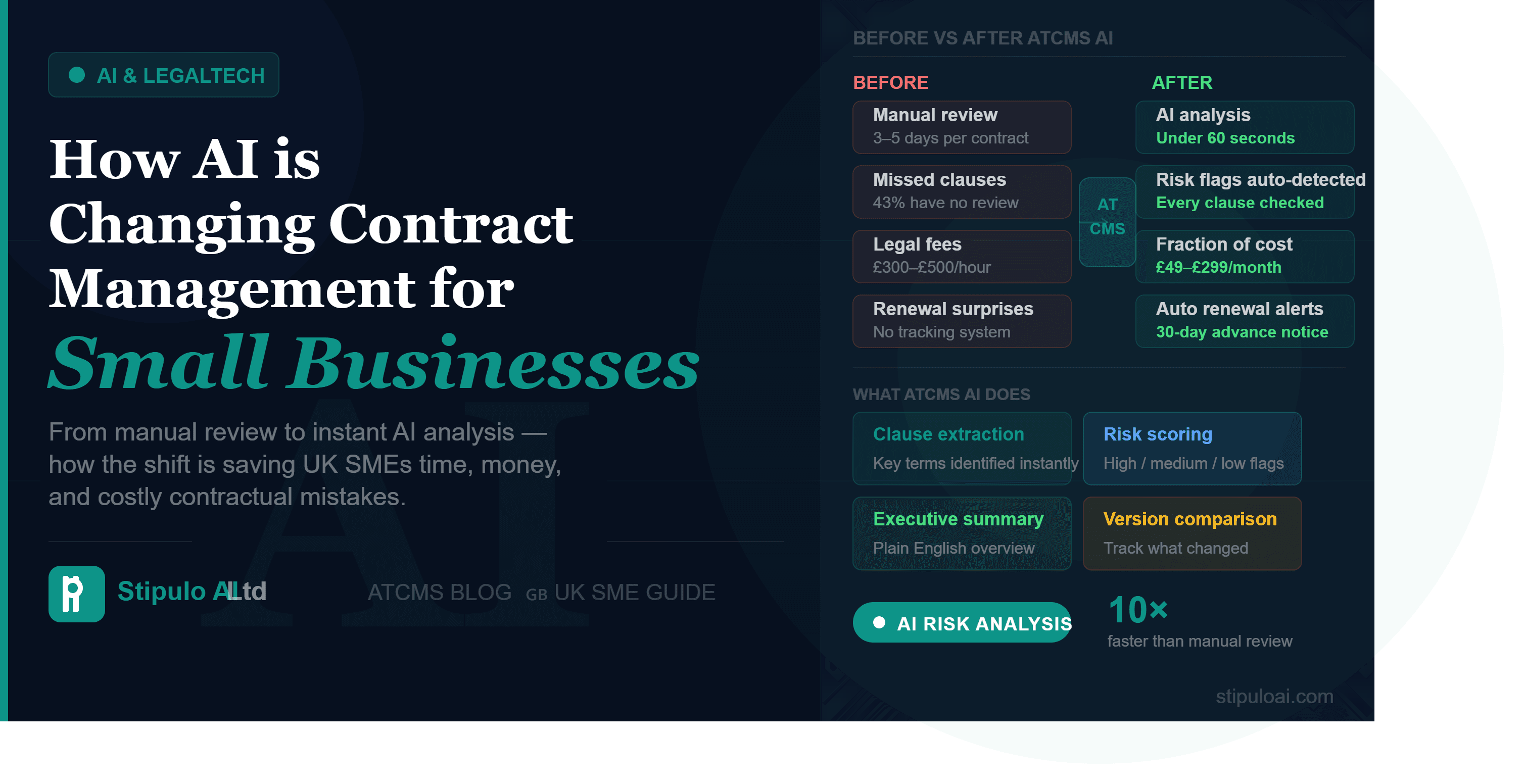
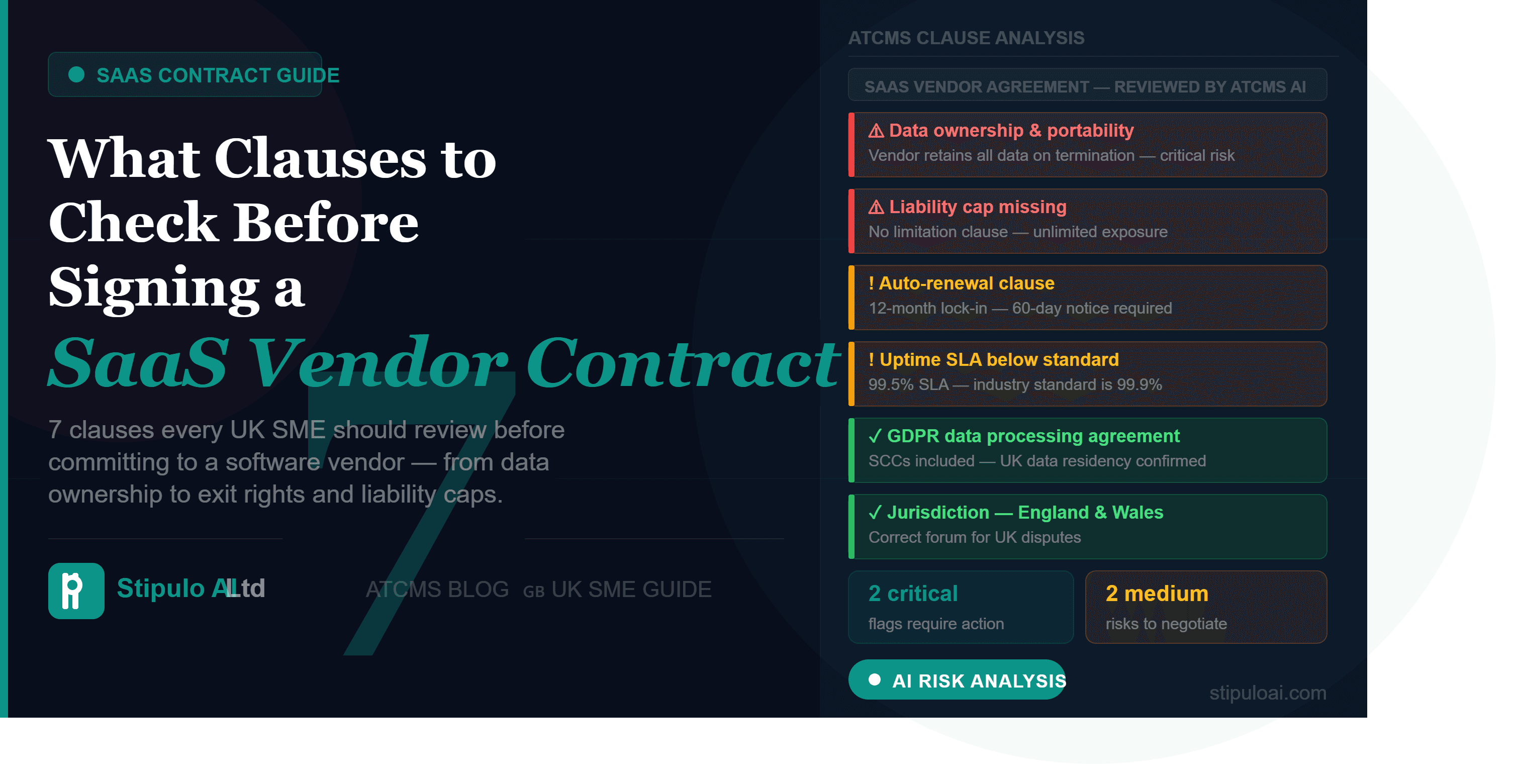
Extract key clauses automatically — liability caps, payment terms, termination provisions, IP ownership, confidentiality obligations — all identified and summarised within seconds of uploading a document
Score risk — flag clauses that are above or below market standard, or that represent genuine legal risk
Compare against a baseline — check whether your standard contract terms have been altered, and highlight deviations
Track obligations — identify dates, deadlines, and recurring obligations so nothing is missed
Guide negotiation — suggest alternative language for unfavourable clauses, based on what's market standard
This isn't a replacement for a solicitor when you need one. But for the day-to-day review of vendor contracts, SaaS agreements, and supplier terms, AI analysis provides a level of oversight that was previously only available to organisations with in-house legal teams.
The economics have changed
Enterprise contract lifecycle management (CLM) software — tools like Ironclad, ContractPodAi, or Juro — typically cost £50,000-£200,000 per year for enterprise licences. That's simply not accessible to a business with 10 or 20 employees.
AI-first tools built specifically for SMEs have changed the economics entirely. For £49-199 per month, a small business can now access:
AI contract analysis and risk scoring
Obligation tracking and automated alerts
Vendor comparison and tender evaluation
Negotiation coaching
Clause playbooks and baseline management
The ROI is straightforward: one missed auto-renewal, one overlooked liability clause, one untracked obligation — any of these can cost far more than a year's subscription.
Real use cases for SMEs
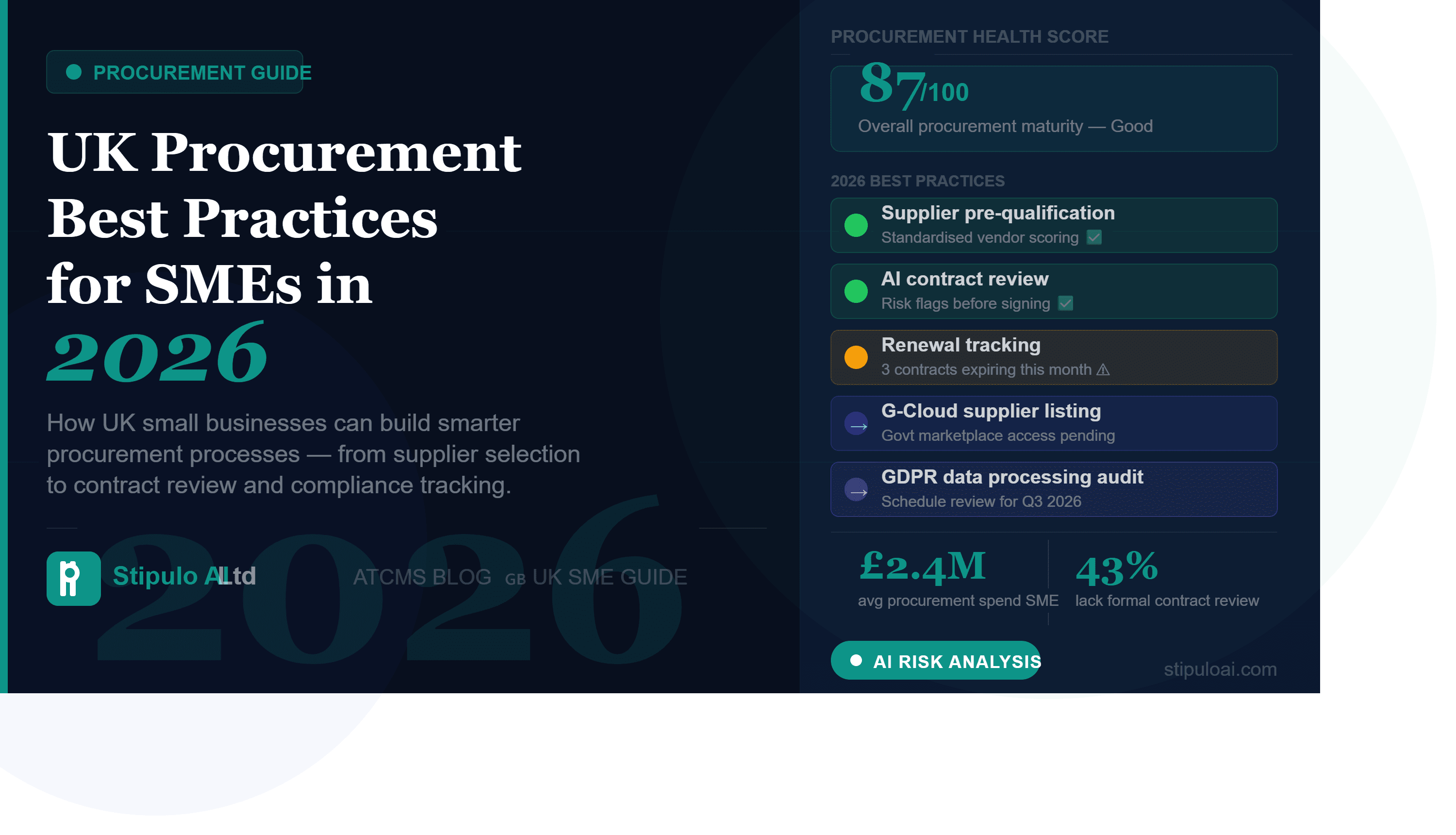
Procurement teams use AI contract analysis to evaluate vendor proposals side by side, scoring each against weighted criteria, and identifying which supplier offers the best combination of commercial terms and legal protection.
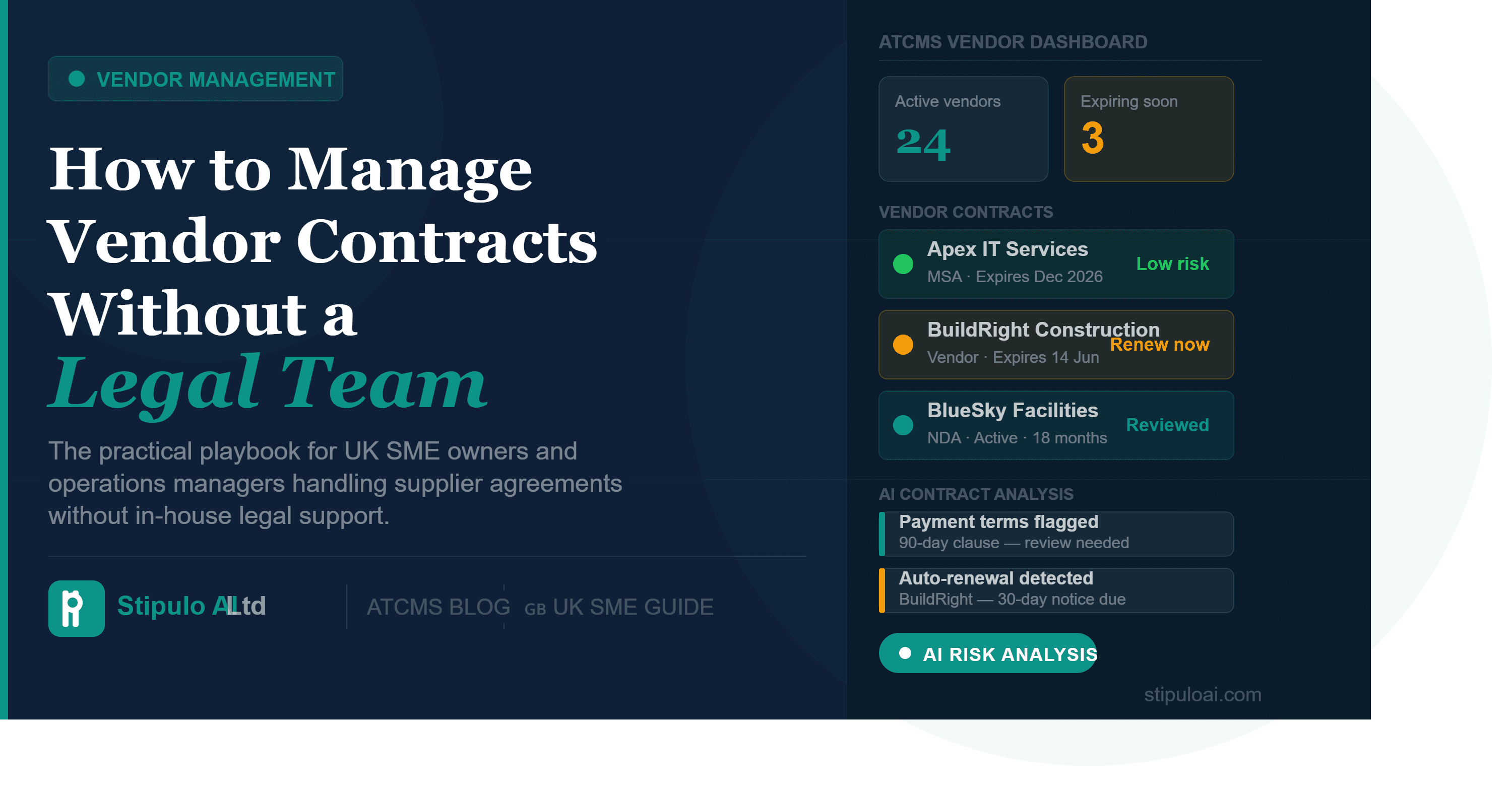
Operations managers use obligation tracking to ensure that every deadline, notice period, and renewal date is flagged well in advance — not discovered after the fact.
Founders and CEOs use AI negotiation guidance to understand what's negotiable in the contracts they receive, and what alternative language to propose — without needing to call a solicitor for every contract review.
What AI can't do
It's worth being clear about limitations. AI contract analysis is powerful, but it's not legal advice. For high-value contracts, novel legal questions, or disputes, you still need a qualified solicitor. AI tools accelerate the review process and surface the issues — a human makes the final judgement.
AI models can also miss context. A clause that looks standard in isolation might be problematic given the specific commercial relationship. Experience and judgement remain essential.
The direction of travel
The capability of AI contract analysis is improving rapidly. Within the next 2-3 years, we can expect:
Real-time negotiation assistance during contract redlines
Automatic clause generation tailored to specific jurisdictions and industries
Predictive risk scoring based on historical contract outcomes
Integration with e-signature and payment systems for fully automated contract lifecycle management
For SMEs, the practical implication is clear: the tools available today already provide substantial value. Waiting for the technology to mature further means leaving money on the table now.
The bottom line
AI has democratised access to contract intelligence. The question for SMEs is no longer whether they can afford AI-powered contract management — at £49/month, they can. The question is whether they can afford not to have it.