If you run a small business, you're probably managing vendor contracts with a spreadsheet, a shared drive, and a lot of hope. You're not alone — the majority of UK SMEs have no formal contract management process.
That's a problem.
The real cost of poor contract management
Poor contract management costs businesses money in ways that aren't always obvious:
Auto-renewals that lock you into services you no longer need
Missed notice periods that mean you can't exit a contract when you want to
Obligation dates that pass unnoticed, creating liability
Unfavourable terms that were never reviewed before signing
Vendor lock-in clauses buried in the small print
A 2023 survey found that businesses lose an average of 9% of annual revenue to contract-related inefficiencies. For a £500,000 turnover business, that's £45,000 a year.
What you actually need
You don't need a legal team. You need a system. Here's a practical framework for SMEs:
1. Centralise your contracts
Stop storing contracts in email attachments and personal drives. Create one central location — even a dedicated folder in Google Drive is better than nothing. Everyone who needs access should have it.
2. Track key dates
For every contract, record:
Set calendar reminders at least 90 days before any critical date.
3. Know what you've agreed to
Read the contract — or at least the key sections. Focus on:
If you can't understand it, use an AI tool or ask a solicitor to review the key clauses. The cost of a 30-minute legal review is far less than the cost of a dispute.
4. Review annually
Set an annual review date for all active contracts. Ask: Is this vendor still delivering value? Are the terms still appropriate for where our business is now?
5. Build a playbook
Over time, develop standard positions on key clauses — what's acceptable, what's a red line, what you'll always push back on. This becomes institutional knowledge that protects the business even as team members change.
How AI changes the game for SMEs
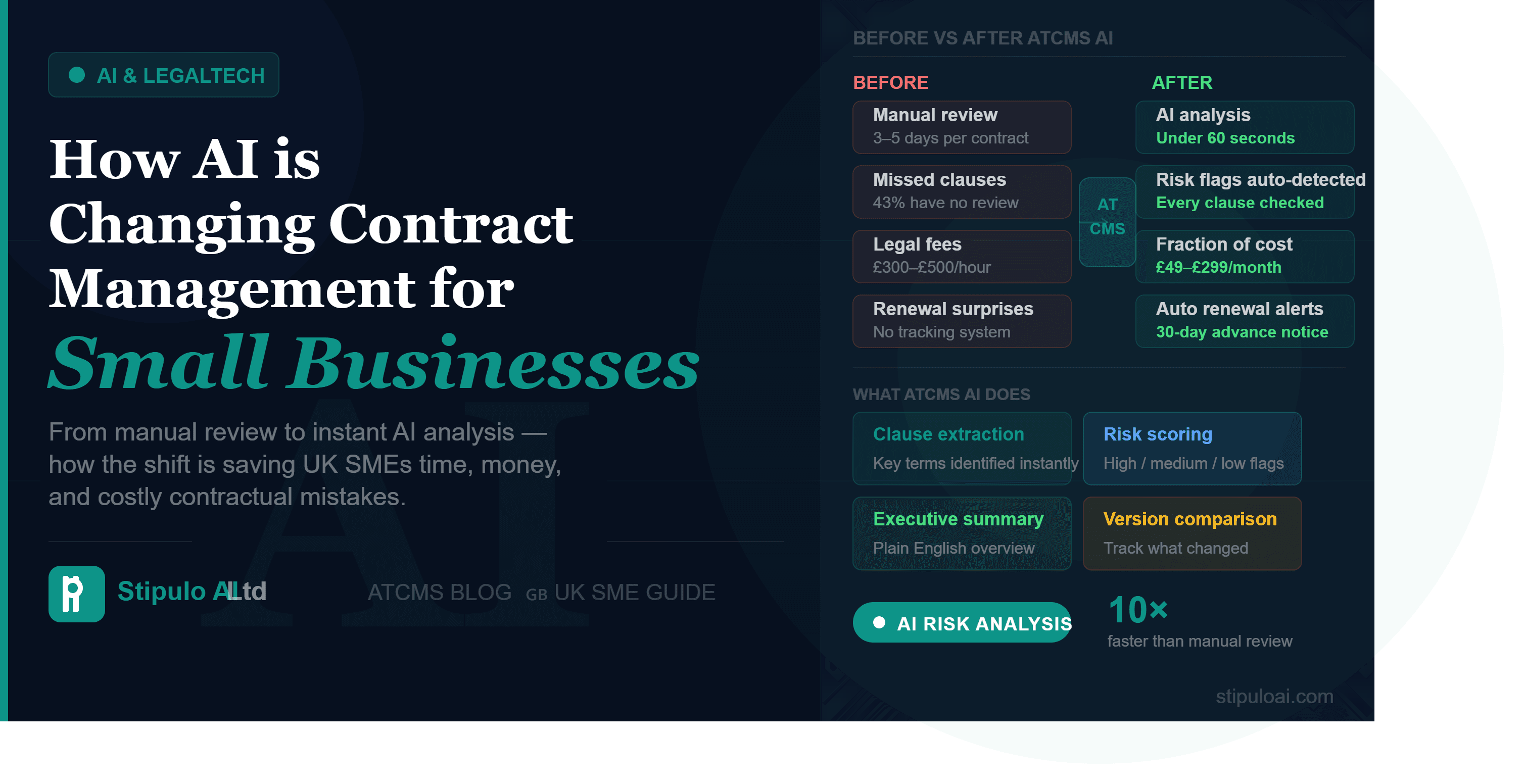
AI-powered contract analysis tools have made enterprise-grade contract review accessible to businesses of any size. Tools like ATCMS can:
Extract all key clauses from a contract in seconds
Flag high-risk terms automatically
Track obligation dates and send alerts
Compare contracts against your standard baseline
Generate negotiation guidance for unfavourable terms
What used to take a solicitor several hours now takes minutes. For SMEs without legal teams, this is a genuine leveller.
The bottom line
You don't need a legal team to manage contracts well. You need a process, the right tools, and the discipline to follow through. Start simple, stay consistent, and use technology to scale your oversight as your vendor base grows.