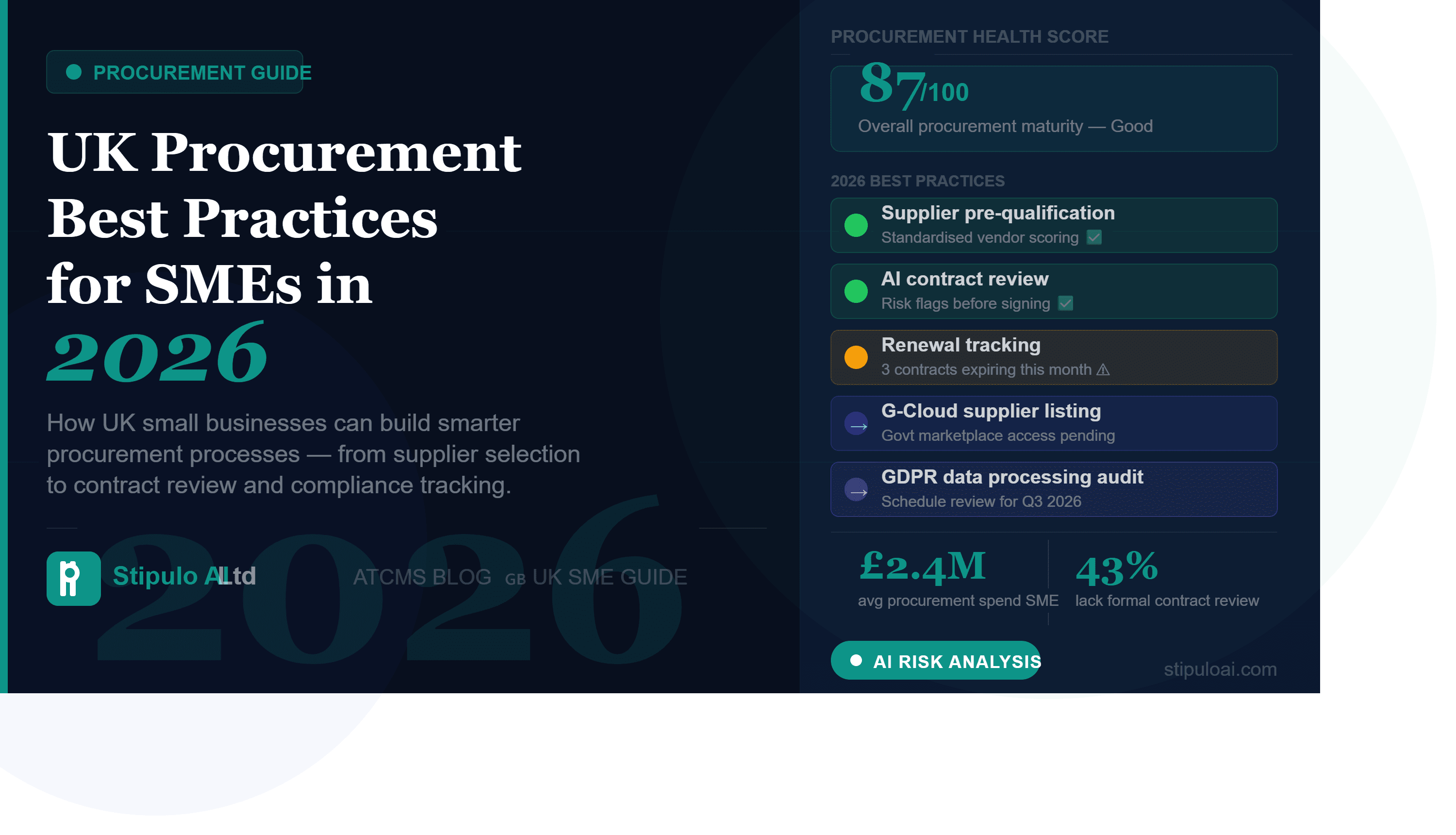
Procurement is no longer just for large organisations. As supply chains become more complex and compliance requirements grow, UK SMEs need to take a more structured approach to how they buy goods and services — and how they respond to tender opportunities.
The UK procurement landscape in 2026
The Procurement Act 2023, which came into force in February 2024, significantly changed how public sector bodies in the UK run tenders. For SMEs, this represents both an opportunity and a challenge.
The Act introduces:
Greater transparency requirements for public contracts
Simpler processes designed to make it easier for SMEs to bid
A new dynamic market system replacing the old framework agreements
Stronger protections around payment terms
SMEs now have better access to public sector contracts than ever before. But to take advantage, you need to be procurement-ready.
What does procurement-ready look like?
1. Financial standing You'll need up-to-date accounts, evidence of financial stability, and often professional indemnity and public liability insurance. Check requirements before bidding.
2. Policies and procedures Many public sector tenders require you to demonstrate you have policies covering: health and safety, equal opportunities, data protection (GDPR), and environmental impact. If you don't have these, create them before you start bidding.
3. Case studies and references Prepare 2-3 strong case studies that demonstrate relevant experience. Be specific about the challenge, your approach, and the measurable outcome.
4. Pre-qualification questionnaires (PQQs) Get familiar with PQQ requirements. Many buyers use standard questions — if you've answered them well once, you can reuse and adapt responses.
Vendor evaluation: choosing your suppliers wisely
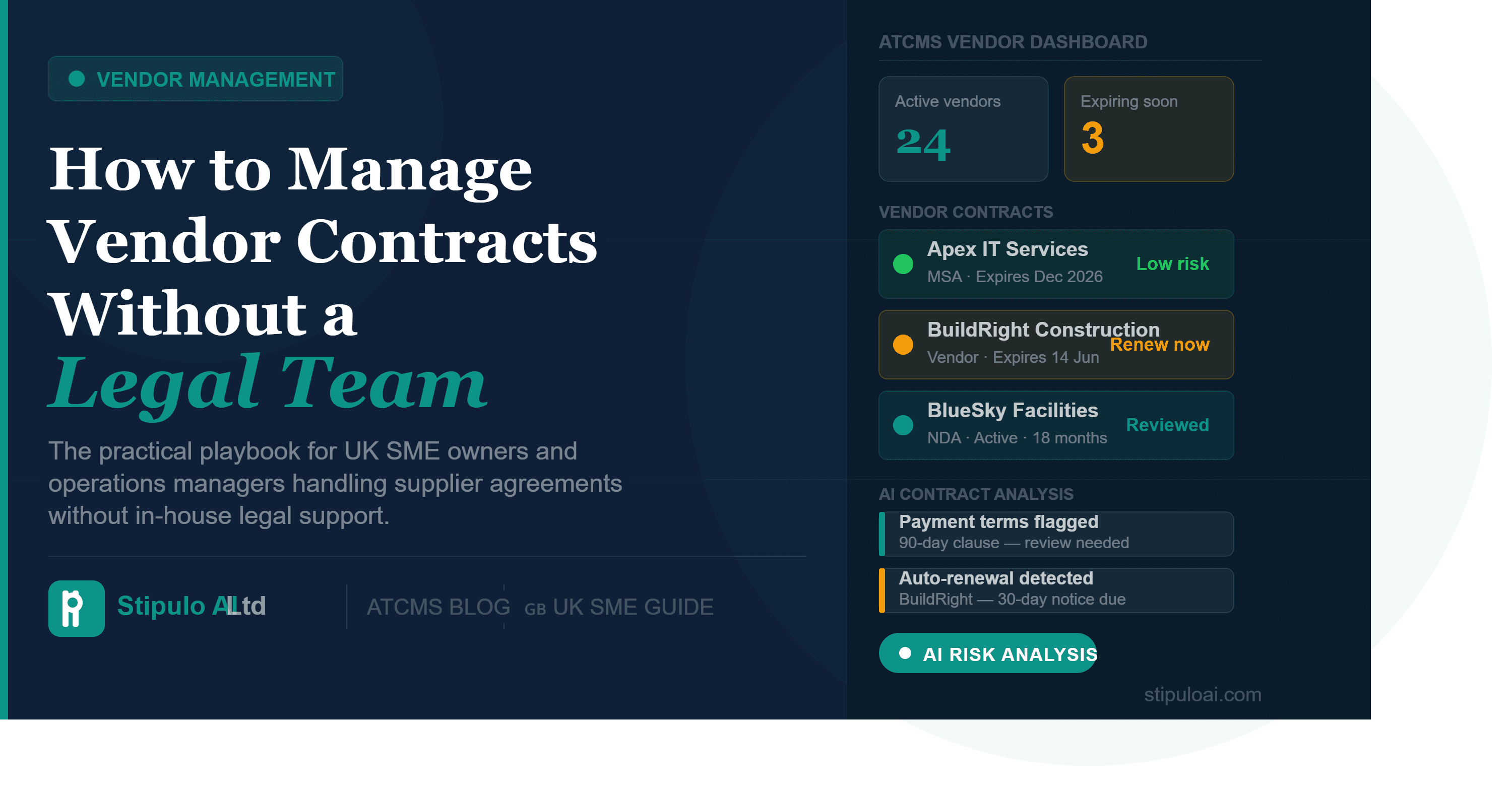
On the other side — how you evaluate and select suppliers matters as much as how you win business.
Best practices for vendor evaluation in 2026:
Score multiple criteria — don't just choose on price. Evaluate quality, reliability, financial stability, and contract terms.
Compare vendors side by side — use a consistent scoring framework across all bids received.
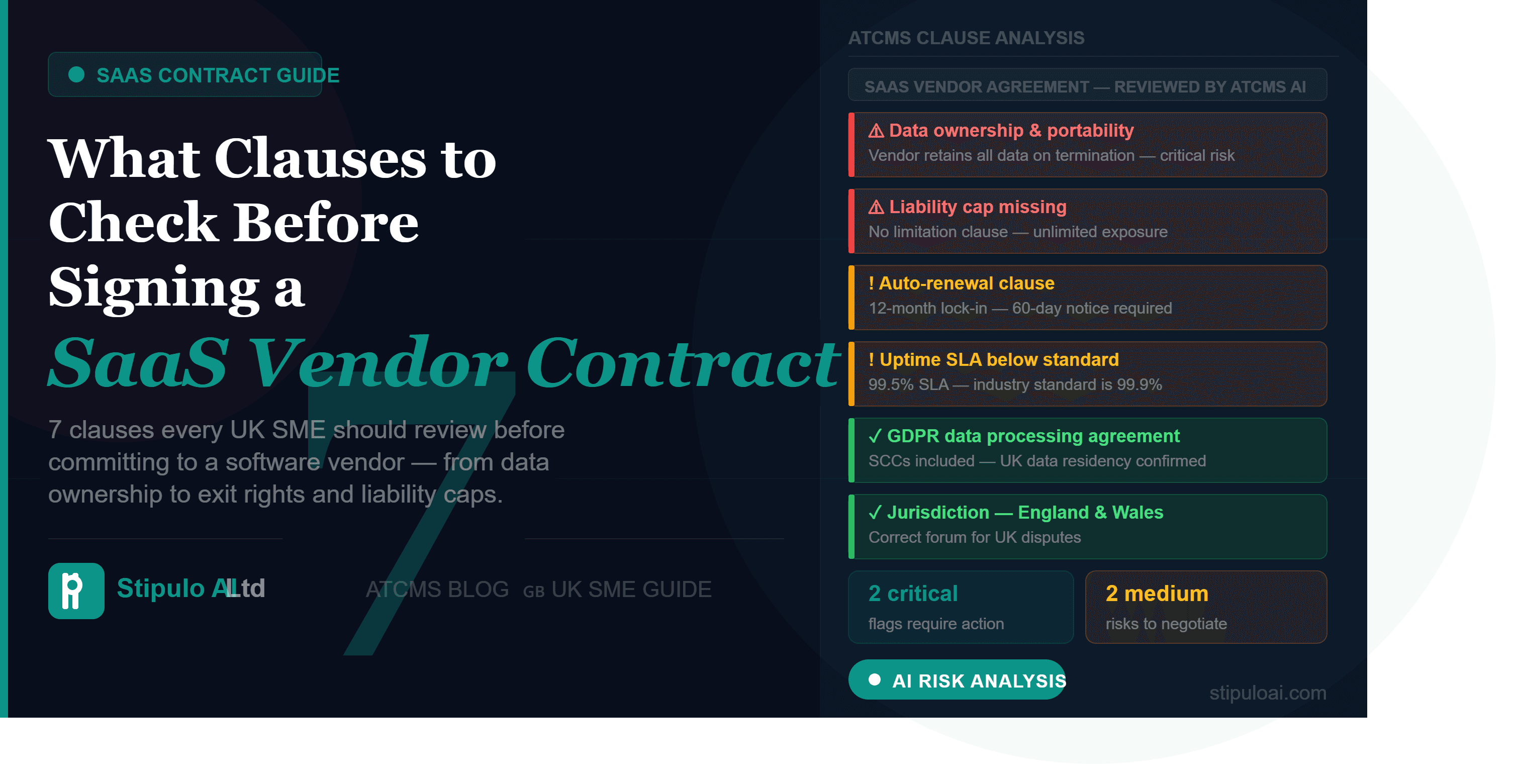
Evaluate contract terms — the cheapest supplier with the worst liability cap or exit terms may not be the best choice.
Document your decisions — if challenged, you need an audit trail showing how you reached your decision.
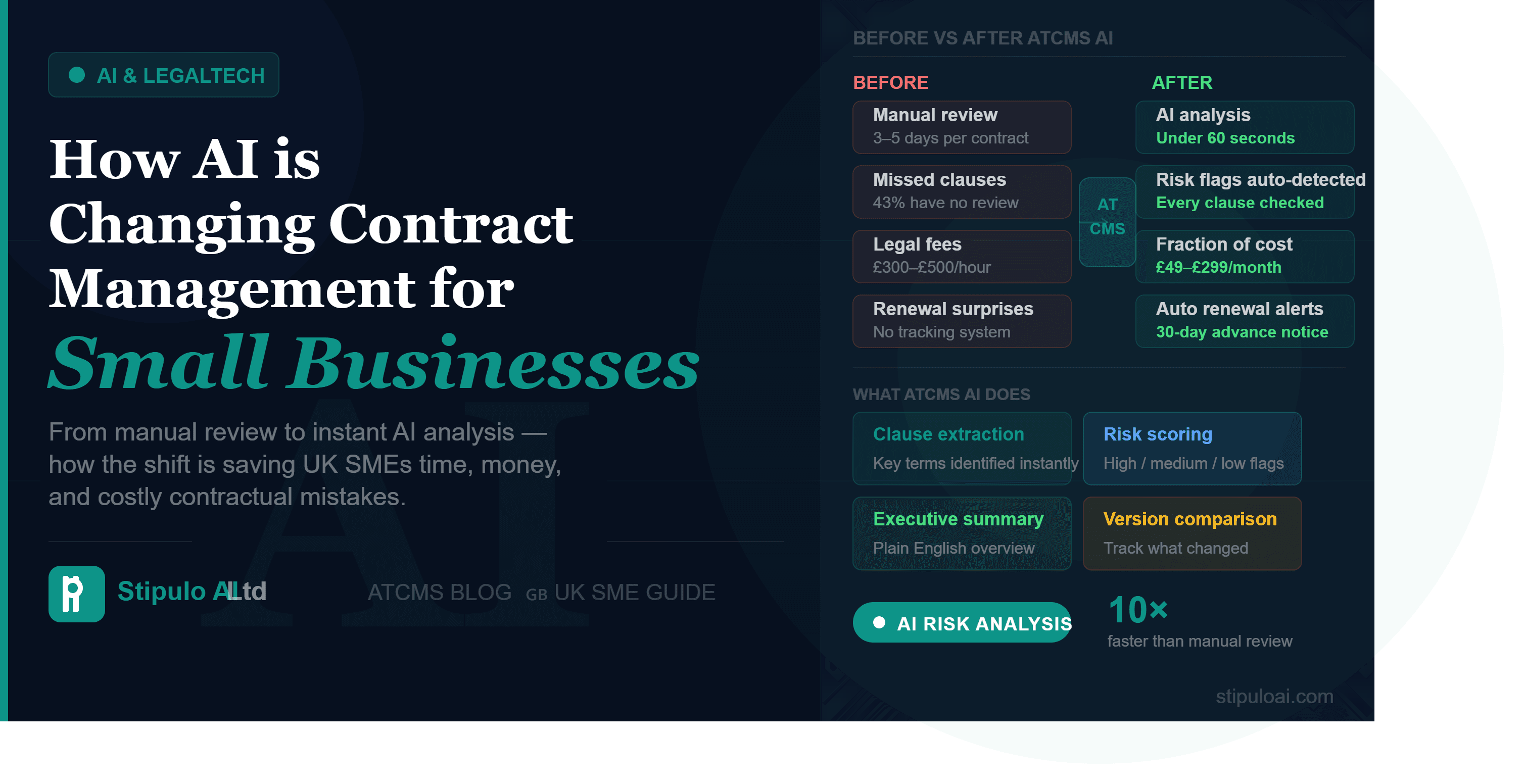
AI-powered tools like ATCMS's Tender Battle Room allow you to upload multiple vendor proposals and get instant AI-powered rankings across legal, commercial, and compliance criteria — bringing enterprise-grade procurement analysis to SME budgets.
Payment terms and cash flow
Late payment continues to be a major issue for UK SMEs. Best practices:
Always specify payment terms clearly in contracts (30 days is standard; push for shorter where possible)
Include late payment interest clauses (the Late Payment of Commercial Debts Act entitles you to 8% above base rate)
Use milestone-based payment schedules for large projects
Check buyer payment track records before entering long contracts
The bottom line
Procurement is a competitive advantage for SMEs that get it right. The businesses that win more tenders, manage supplier relationships effectively, and protect themselves contractually will outperform those that treat procurement as an afterthought.